Diana ODG

Montessori and the Circle of Inclusion Project

In September 2015, the U.S. Department of Education and the Department of Health and Human Services issued a joint policy statement on Inclusion of Children with Disabilities in Early Childhood Programs that states that “all young children with disabilities should have access to inclusive high-quality early childhood programs, where they are provided with individualized and Montessori and the Circle of Inclusion Project

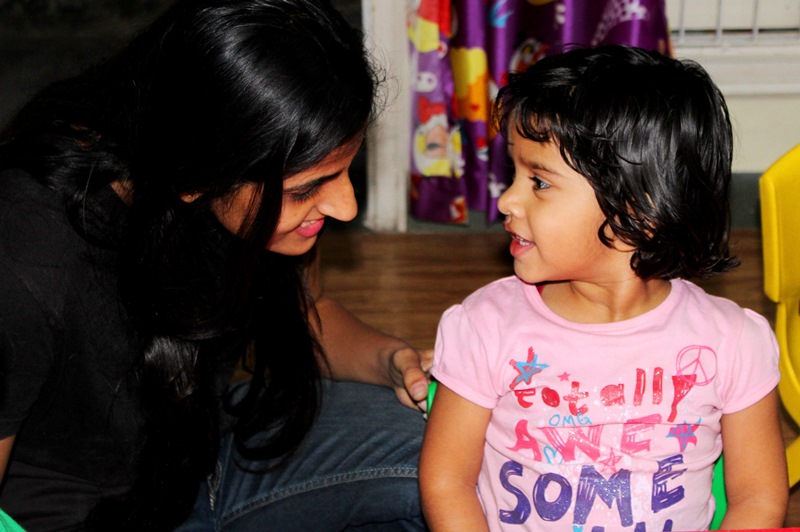
Being an Attentive Observer in the Montessori Classroom: Our Primary Role

I have a confession to make. When I first became a Montessori teacher, I didn’t know the first thing about observing children. I thought observations were only about marking down on record-keeping sheets which presentations were given, when the child had practiced the activity, and when they mastered it… and then I read a quote Being an Attentive Observer in the Montessori Classroom: Our Primary Role

Following the Child through Observation in the Montessori Environment

Since the teacher’s task was to free each child to learn, and since each child, responding to the inner laws of his own organism, had different needs and a different developmental timetable, the teacher could not function effectively without an awareness of the infinity of variations in child behavior. Under the Montessori rubric, the teacher Following the Child through Observation in the Montessori Environment

History Timelines in the Montessori Lower Elementary Classroom

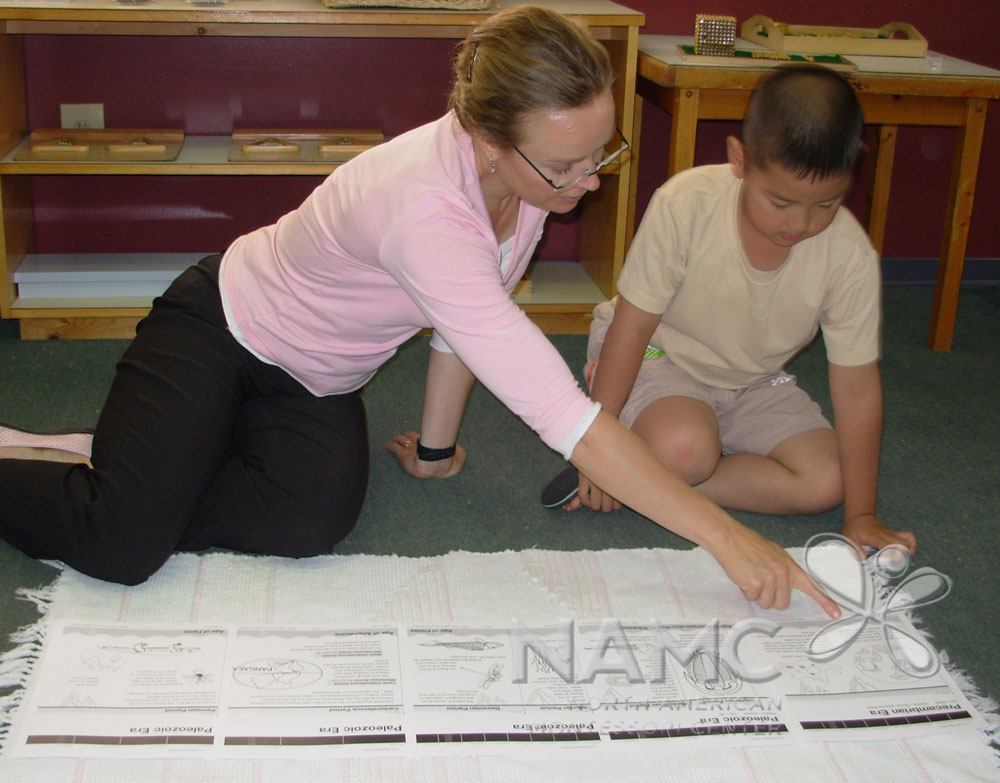
  Illustrated as it must be by fascinating charts and diagrams, the creation of earth as we now know it unfolds before the child’s imagination… —Maria MontessoriTo Educate the Human Potential, p. 2. The Montessori timelines in the NAMC History manual are beautiful presentations that naturally continue the excitement and awe the children experience during History Timelines in the Montessori Lower Elementary Classroom

NAMC’s 20 Lessons from 20 Years: Encourage Freedom of Exploration

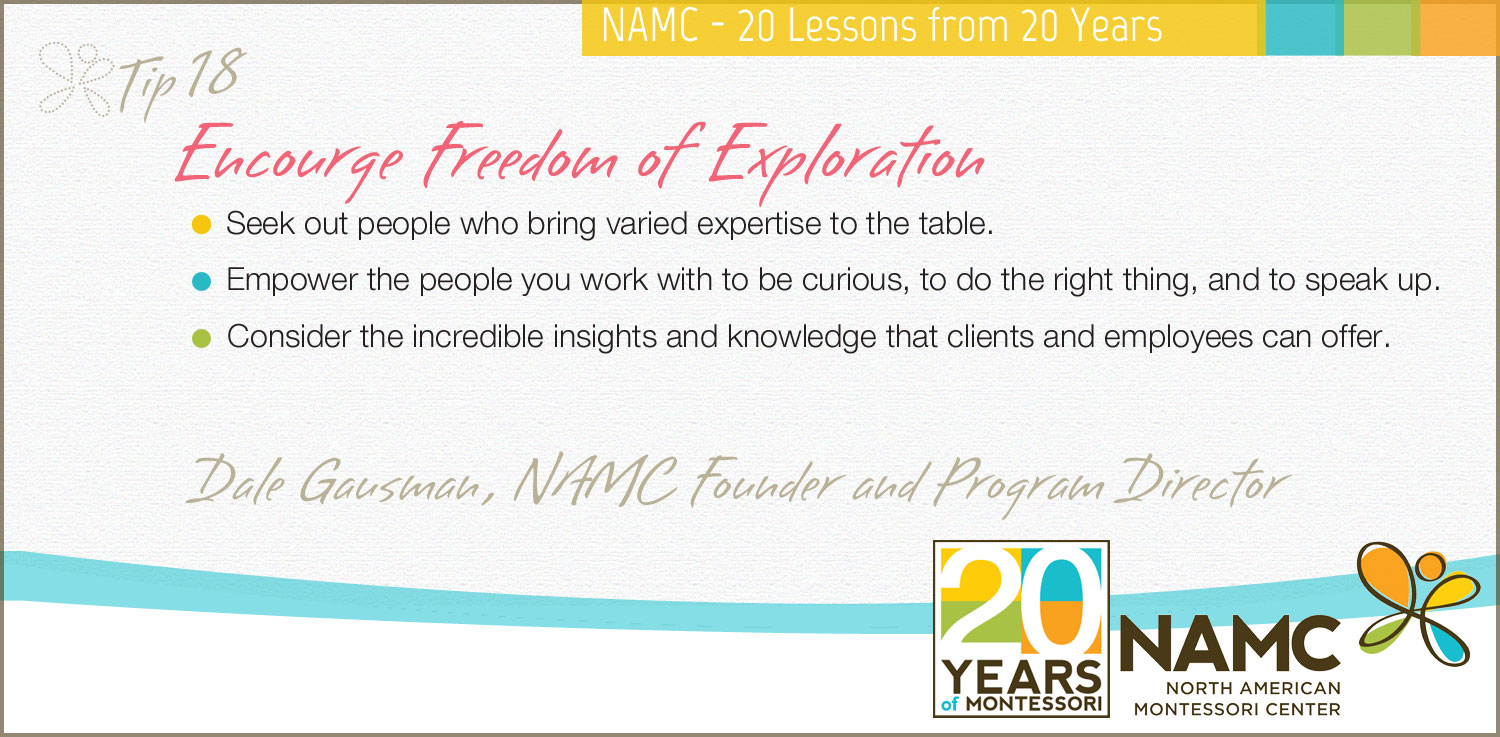
As Montessorians, we welcome children to explore all the time. It is through their exploration and hands-on learning that they understand new ideas, solve problems, and come up with amazing innovations. This freedom that we allow in children, that we consistently encourage and support, should also be afforded the people we work with. When we NAMC’s 20 Lessons from 20 Years: Encourage Freedom of Exploration