Diana ODG

Montessori Education for Nurturing the Authentic Child: Development and Success

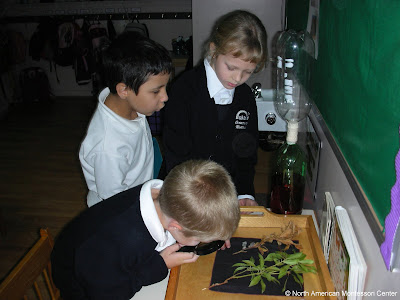
What is the meaning of Authentic? Etymologically speaking, it is derived from the Greek root authentiko, which means “author”. The Authentic Child is a child who is allowed to develop or “author” himself. According to Pia Melody (The Intimacy Factor: The Ground Rules for Overcoming the Obstacles to Truth, Respect, and Lasting Love. Harper Collins. Montessori Education for Nurturing the Authentic Child: Development and Success
The Six Principles of the Montessori Prepared Environment Explained

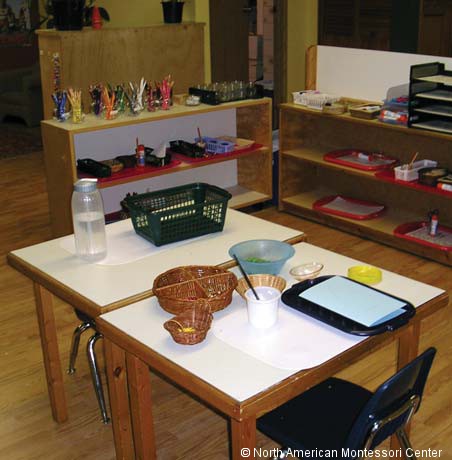
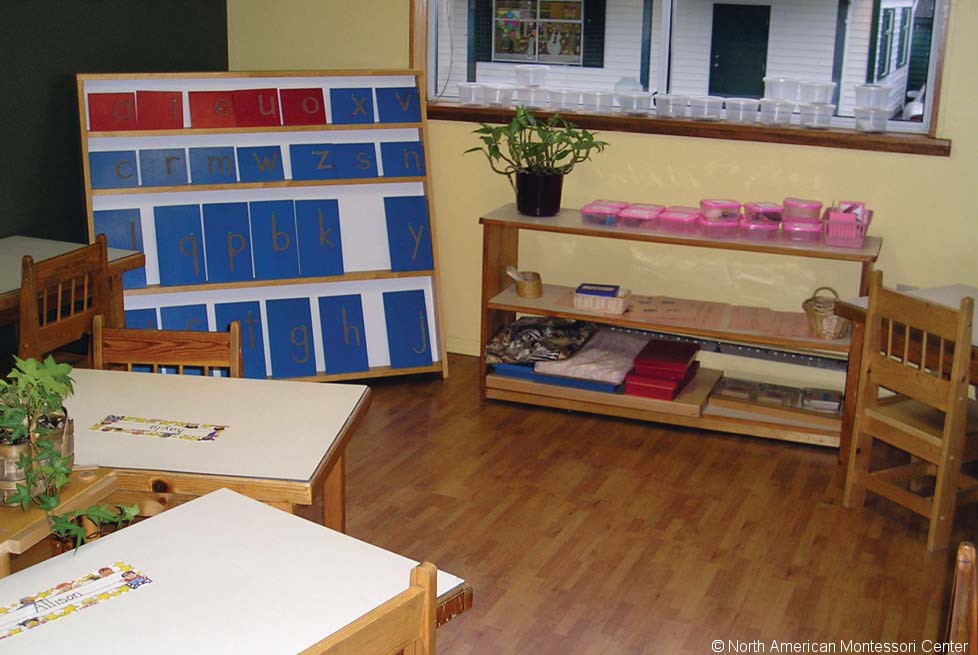
  The first aim of the prepared environment is, as far as it is possible, to render the growing child independent of the adult. —Maria Montessori   The Secret of Childhood, 1966. Montessori’s idea of the prepared environment was that everything the child came in contact with would facilitate and maximize independent learning and exploration. This calm, The Six Principles of the Montessori Prepared Environment Explained

Parent Education Beyond Orientation: Tips for Teachers – Montessori Community

In an earlier blog (The Importance of Educating the Montessori Parent, January 13, 2008), I wrote that “Educating parents, both current and future, about Montessori education is a win-win situation”. There is so much more to Parent Education than orientation and back-to-school nights, and this as well as future blogs are being written to provide Parent Education Beyond Orientation: Tips for Teachers – Montessori Community

Celebrate St. Patrick’s Day With Montessori Classroom Activities

I love using cultural celebrations as an exciting way to incorporate different thematic learning across the curricular areas in my Montessori classroom. This year I am using St. Patrick’s Day to kick off a “Month of Green” that will culminate with Earth Day on April 22. Our Montessori class starts with reading books and discussing Celebrate St. Patrick’s Day With Montessori Classroom Activities

Montessori Teacher Self Reflection and Self Assessment: Constructive Goal Setting and Feedback

As a newly-trained Montessori teacher, I was given the task of submitting several, formal, self-reflections and self-assessments during my intern year. These were to be read by my immediate supervising Montessori teacher as well as the administrator of the Montessori school. Although I had completed my training and felt confident that I knew the Montessori Montessori Teacher Self Reflection and Self Assessment: Constructive Goal Setting and Feedback

Montessori Parent / Teacher Communication and Collaboration: An Education for Life

I recently participated in a parent conference where a parent argued that a teacher’s purpose is to educate his child, not to teach the child to be responsible. I was quite taken aback! After all, one of the basic tenets of Montessori education is to “foster competent, responsible, adaptive citizens who are lifelong learners and Montessori Parent / Teacher Communication and Collaboration: An Education for Life

Montessori Teachers and Restraint: Reflections on Purpose, Freedom and Ability

Every useless help given to the child becomes an obstacle to his development- this is not merely philosophy but a fact to which we attach fundamental importance.– Maria Montessori, Creative Development in the Child, Volume One I grew up in a family of two children. As the oldest, I kept a watchful eye on my Montessori Teachers and Restraint: Reflections on Purpose, Freedom and Ability

Modeling Montessori Behavior in the Home: Through the Eyes (Ears, and Nose) of a Child

Growing up, I remember my grandmother cautioning “Little pitchers have big ears”. I always wondered why “pictures” needed ears! When I was older, I understood she meant that the children were listening, but I wondered again why she called us pitchers. After all, none of us played baseball. It wasn’t until I was an adult when I Modeling Montessori Behavior in the Home: Through the Eyes (Ears, and Nose) of a Child